
Postion: Home > Our Case > CNC Machining Services >
CNC turning is commonly used to manufacture cylindrical and rotational parts such as shafts, bushings, sleeves, pins and threaded components.
Understanding part geometry, material, tool access and length-to-diameter relationships can help improve machinability and reduce unnecessary machining cost.
Send your drawing, material, quantity and key requirements for review.
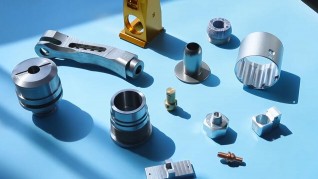
In CNC turning, the workpiece rotates while cutting tools remove material from the outer or inner diameter to create the required shape.
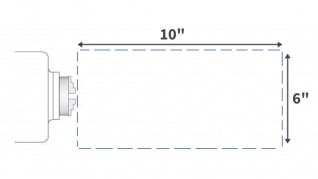
Turning suitability depends on part diameter, overall length, workholding, tool access and material rigidity.
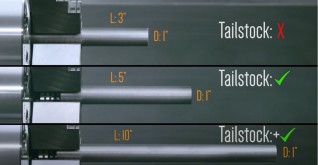
Long and slender parts may require additional support or a different machining strategy to control vibration and maintain dimensional consistency.
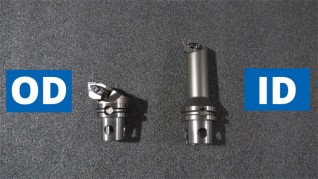
CNC turning may use external turning tools, boring bars, drills, reamers, grooving tools and threading inserts depending on the required geometry.
Common materials include aluminum, stainless steel, carbon steel, brass, copper and engineering plastics.
For quotation, please provide your 2D / 3D drawing, material, quantity, critical diameters, thread specifications, tolerances and surface finish requirements.
Customer drawings, CAD files and technical specifications are treated as confidential. NDA support is available for custom CNC turning projects.
Shenzhen Hongming Sheng Technology Co., Ltd. Tel\Wechat\Whatsapp:+86 18818409949
 Address: No. 132, Dongfa Road, Dongkeng Village, Gongming Street, Guangming New District, Shenzhen
 E-MAIL: info@hms1688.com

Copyright©2010-2026 Power by Jim design

 TOP
TOP