
Postion: Home > Our Case > Stamping & Bending >
Stable stamped parts depend on the drawing, material, tooling and inspection plan working together.
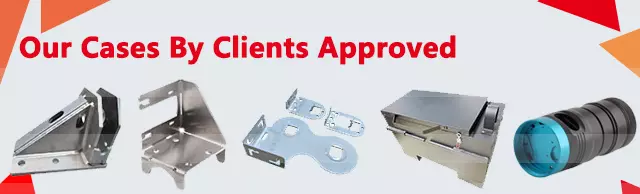
Hongming Sheng manufactures custom brackets, contacts, clips, shields, covers and formed parts for OEM projects.
For PDF, STEP/STP and other technical files, email directly to:
info@hms1688.com
Leave Contact & Project DetailsThe online form collects contact information and basic project details. Please email drawing attachments separately.
Die clearance, forming sequence, strip layout and guiding influence dimensional stability and edge condition.
Grade, temper, thickness and coil variation affect springback, forming behavior and repeatability.
Press setup, feed alignment, shut height and tooling condition must remain controlled throughout production.
Critical dimensions, datums, burr direction and cosmetic surfaces need clear acceptance criteria.
Dedicated tooling can reproduce the same cutting and forming operations across repeat orders.
Progressive or staged tooling may combine cutting, piercing and forming when volume supports the tooling investment.
Coil width, carrier design and part orientation can be reviewed to control material utilization and scrap.
Tabs, holes, bends and locating details may simplify downstream assembly when properly toleranced.
Custom stamped components can support automotive assemblies, electronics, energy systems, industrial automation, communication equipment and medical-equipment assemblies. Suitability depends on the drawing, material, quantity and application requirements.
See more about our custom metal stamping capabilities.
Send the drawing, material, thickness and quantity for a review of the tooling route and critical requirements.
Email: info@hms1688.com
Request Stamping Project ReviewThe inquiry form does not accept drawing attachments. Please email technical files directly.
Customer drawings, samples and tooling information are handled confidentially. NDA support is available for OEM projects.
Shenzhen Hongming Sheng Technology Co., Ltd. Tel\Wechat\Whatsapp:+86 18818409949
 Address: No. 132, Dongfa Road, Dongkeng Village, Gongming Street, Guangming New District, Shenzhen
 E-MAIL: info@hms1688.com

Copyright©2010-2026 Power by Jim design

 TOP