Custom Enclosure Thermal Management
Good cooling starts with a defined path from the heat source to the outside environment.
Hongming Sheng manufactures drawing-based custom sheet metal enclosures with ventilation, fan interfaces, heat-sink mounts and assembly features for communication, power and embedded devices.
Email: info@hms1688.com
Send Enclosure Drawings← Swipe for more sections →
The Enclosure Heat Path
01Heat SourceProcessors, power devices or internal modules.
02Thermal InterfacePads, plates, brackets or contact surfaces.
03Metal StructurePanels, chassis and mounted heat spreaders.
04Heat RejectionNatural airflow, forced air and surface radiation.
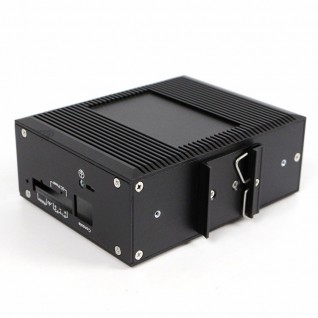
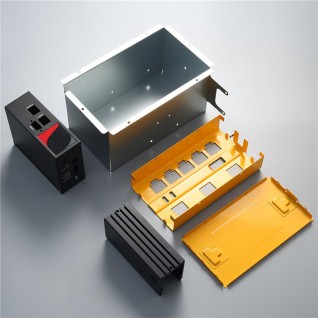
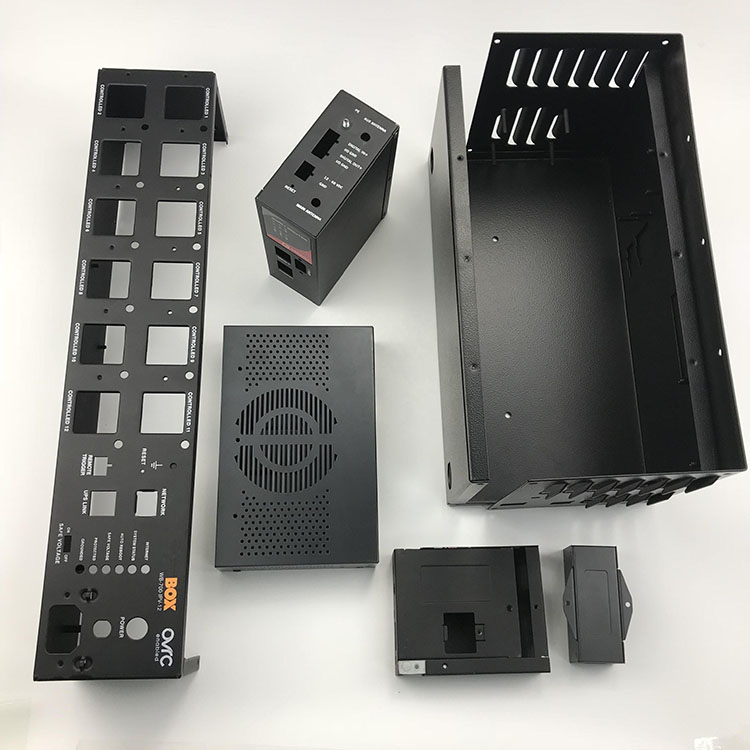
Ventilated Enclosure Examples
← Swipe to view more images →
Thermal & Structural Features
Vents & LouversLaser-cut or punched openings positioned around the intended airflow route.
Fan & Filter MountsInterfaces for fans, guards, replaceable filters and cable access.
Heat-Sink InterfacesFlat contact areas, studs, inserts and brackets for thermal components.
Air Guides & PartitionsInternal baffles can separate hot and cool zones and reduce recirculation.
EMI & Ingress DetailsOpenings, seams and gaskets should balance cooling with shielding and environmental protection.
Material & Finish Review
5052 Aluminum SheetCommonly used for folded enclosure panels because it combines useful thermal conductivity with good sheet-metal formability.
6061 AluminumOften used for machined plates, structural parts and heat-sink interfaces; tight bending details require separate review.
Steel SheetProvides rigidity and can support magnetic shielding, but its lower thermal conductivity may require additional airflow or heat-spreading measures.
Anodizing & CoatingFinishes influence corrosion protection, appearance and surface behavior, but they do not determine enclosure temperature by themselves.
Ventilation area alone cannot predict the final temperature.Heat load, component position, interface resistance, airflow, ambient temperature, dust protection and installation orientation should be considered together. Thermal simulation or physical testing may be required by the project.
2D enclosure drawing and 3D assembly model
PCB, power-module and heat-source locations
Heat load or component power-loss data
Ambient and target operating temperatures
Natural or forced-air requirement
IP, EMI, acoustic and dust constraints
Material, finish, quantity and delivery destination
Need an Enclosure with Thermal Features?Send your enclosure drawings, internal layout, material, finish, quantity and thermal requirements for manufacturing review.
Email: info@hms1688.com
Request Enclosure Quote 

 Tel\Wechat\Whatsapp:+86 18818409949
 Address: No. 132, Dongfa Road, Dongkeng Village, Gongming Street, Guangming New District, Shenzhen
 E-MAIL: info@hms1688.com

 TOP
TOP